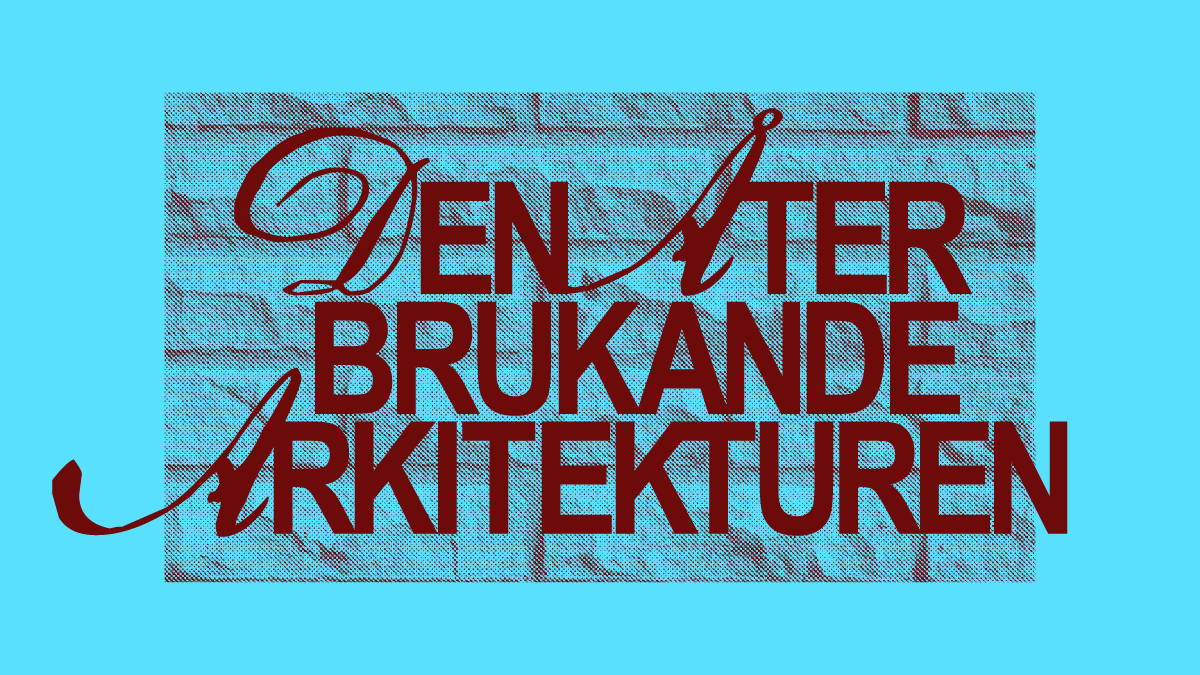
Architecture of Reuse – About aesthetics, sustainability and the future urban space
How can our cities be built and transformed, while also being experienced as attractive, vibrant, and inclusive? Architecture of reuse explores how the reuse of buildings and materials can become a natural part of tomorrow’s urban aesthetic. Through architecture pedagogy and collaborative idea development, participants of different ages and backgrounds are engaged. The project is based at Färgfabriken in Lövholmen, Stockholm – an area currently undergoing transformation from an industrial zone into a residential district – and is developed and shared through workshops, collaborations with architects, exhibition, a festival, and a national dissemination program. Several of the project’s public manifestations will be part of the Architecture Triennial 2027.
Why Architecture of Reuse?
The construction and real estate sector accounts for a large part of society’s climate impact. At the same time, urban development is still characterized by aesthetic ideals that require constant new production. If we are to succeed in reducing emissions and resource consumption, technical solutions are not enough – we also need to change our ideas about what is beautiful, valuable and desirable in the built environment. This project takes its starting point from the existing: in the marginalized, the rebuilt, and the already used. The project wants to contribute to new stories about urban space, where the expression of circularity, care and long-termism is granted its own aesthetic relevance.
The Architecture of Reuse project wants to challenge established ideas about how urban spaces should look and be developed, with a focus on the reuse of architecture as an ongoing process. We start from the need to change society’s view of materials, resources and construction, but also on what is perceived as aesthetically pleasing in urban space.
News and activities
Studio Återbruk
Studio Återbruk (Reuse) is an in-depth process exploring regenerative practices, in which three different architectural practitioners are invited to pose questions and explore issues related to reuse, time, materiality, and aesthetics. Studio Reuse forms one phase of The Reuse Architecture and is part of The Architecture Triennial 2027, which explores the theme of Time Horizons and, within this framework, the ways in which reuse unfolds across different dimensions of time.
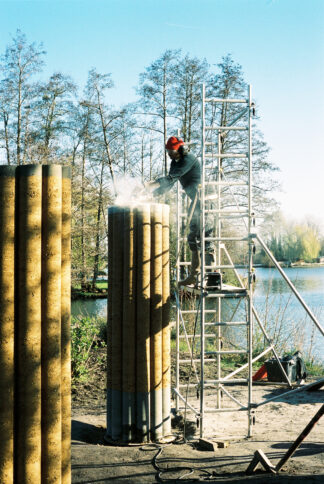
Vincent Dumay
Vincent Dumay, is an architect based in Stockholm and Grenoble, he experiments with clay and earth as building materials, both by themselves and in combination with other materials.
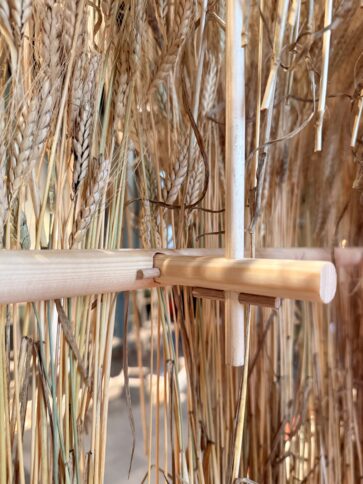
RIFT
RIFT (Regenerative Ideas For Tomorrow) is a Nordic collective and research platform exploring how architecture and material practices can be regenerative rather than extractive. The collective consists of architects Julia Andersson, Kine Jæger-Larasse, and Nicolai Jæger-Larasse.
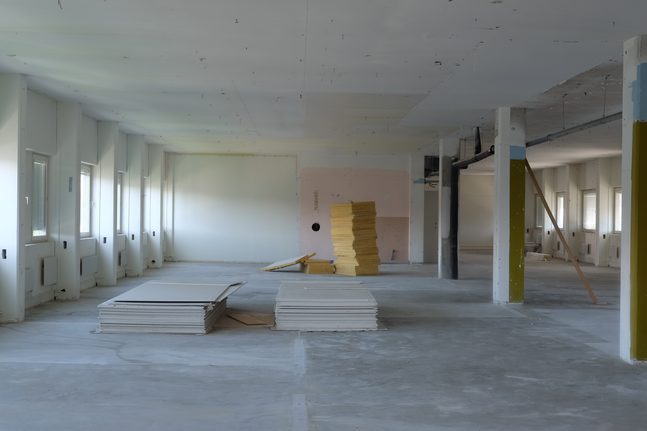
Blick arkitektur
The project is run by Malmö-based Blick Arkitektur, led by Daniel Lindberg, in collaboration with Emma Lindberg. For several years they have developed ideas and projects under the theme “Reusing the Ugly,” exploring buildings that are not old enough to have cultural-historical value, but not new enough to be considered worth renovating or transforming.
Content and phases
The project will be implemented in four consecutive phases between 2026 and 2028.
Agency – mapping phase (2026)
In the initial phase, young people (15–20 years old) and people ages 65+ will work together in a series of workshops. Using artistic and architectural pedagogical methods, they explore questions such as:
- how natural resources are used in our urban spaces
- who has authority over the development of the city
- what aesthetic norms govern how we build
The process will be consolidated in a roundtable discussion and will also serve as a knowledge base for the project’s further phases.
Studio Re-use – in-depth phase (2026–2027)
Three architectural studios are invited to in-depth work on reusing architecture. Based on the results from phase 1, they will develop architectural reuse models and design proposals that examine how reuse can be practiced, communicated and experienced. The focus is as much on process and knowledge exchange as on the designed result.
The city of re-use – mediating phase (spring 2027)
The project culminates in public phase at Färgfabriken, in connection with the Architecture Triennial 2027, with:
- exhibition
- open workshop
- pedagogical programs and school visits
- a one-day festival with conversations, performance and collective creation
Here, participants, architects, artists, researchers and the public meet in a joint exploration of the urban aesthetics of the future.
Resource-conscious design – national dissemination (2027–2028)
In the final phase, the project’s methods and lessons learned are summarized and disseminated through:
- an interdisciplinary conference with a Swedish partner
- a public discussion at the conference Folk och Kultur
- gathered material here on the project page
Phase 4 strengthens the project’s long-term impact and enables continued knowledge exchange nationally and internationally.
For whom?
The project is aimed at:
- young and older citizens
- architects, designers and artists
- schools and educators
- decision-makers and actors in urban planning
- researchers and cultural institutions
- the general public
By working across generations and interdisciplinary, new perspectives are created on both architecture, urban development and citizen influence.
Do you want to know more, or participate?
Architecture of Reuse is an invitation to think, feel and act differently in connection to our shared urban spaces – and to see what is already built as a resource for the future.
Please contact us with questions, thoughts or collaboration proposals.
If you are 15–20 years old or 65+ and are interested in participating in the first phase of the project – Agency (Rådighet) – in a series of three workshops and a round table discussion, get in touch! The activities take place outside school hours and a symbolic financial compensation is paid. Note: Phase 1 is conducted in Swedish.
Contact: Filippa Stålhane: filippa@fargfabriken.se
About the context
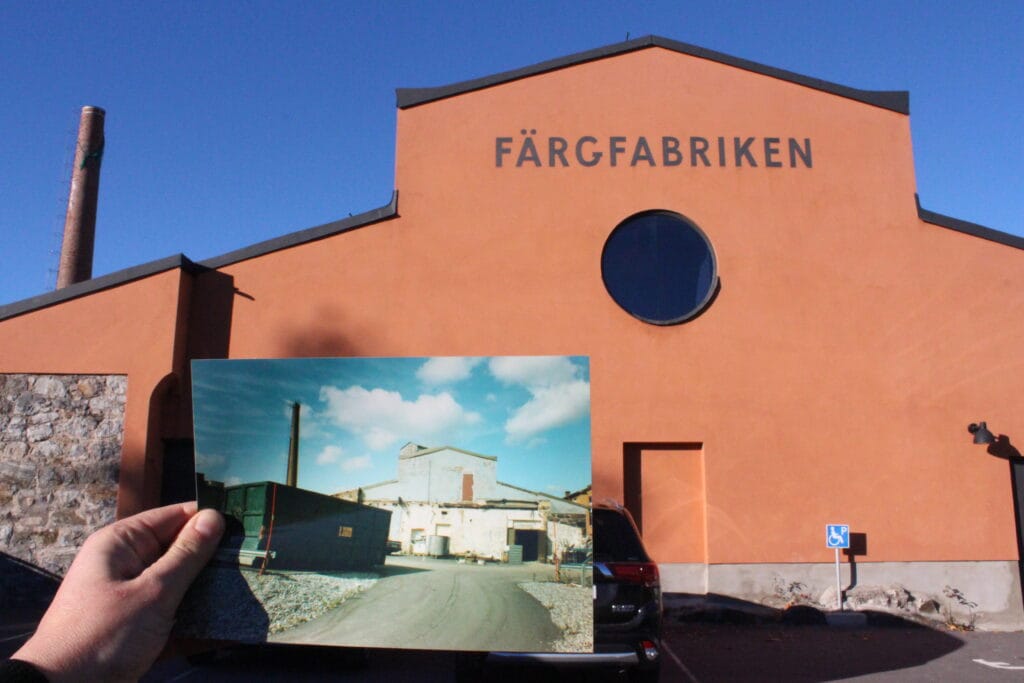
Färgfabriken is an independent foundation that has been working at the intersection of art, architecture and societal issues since 1995. The culture centre in itself is an example of reuse – a former industrial building that has been transformed into a place for contemporary art, architecture and critical thinking. The project is part of Färgfabriken’s long-term work with climate, architectural pedagogy and the ongoing development of the Architecture Triennial, and it is being developed in dialogue with academia, civil society and Färgfabriken’s international network.
The project is made possible with support from the Swedish Postcode Lottery Foundation.
About the Swedish Postcode Lottery Foundation
The Swedish Postcode Lottery Foundation provides fixed-term support to projects that promote positive social development and seek long-term solutions to local and global challenges. Today, the foundation is one of around sixty non-profit organizations that benefit from the Swedish Postcode Lottery’s billion-sek surplus. Since 2007, more than SEK 2.4 billion from the Swedish Postcode Lottery has been provided through the Foundation to over 1,300 projects in Sweden and internationally.
Contact
Funded by