Taking Root – On Soil Relations and Human Endeavors
Group exhibition, Mail Hall
The exhibition opening takes place on 18 April, during Kulturnatt Stockholm 2026. More information about the opening as well as the exhibition programme will be available soon.
Att slå rot (Taking Root) is a group exhibition interweaving questions concerning soil, migration, sorrow and, not least, care. Through contemporary artistic practice we explore how humans, plants, ideas and cultures take root – in the earth, in memory, in language and in new territories.
The exhibition features artists who delve into both the physical and metaphorical process of taking root – how we connect to a location, from migrants’ attempts to find a new home to ecological perspectives on seeds, soil types, trees under threat and conditions needed for taking root.
The Latin origin of the word ‘root’ comes from the term radix, radical. Being rooted also signifies to stand for something, to be dedicated. Simone Weil’s book The Need for Roots (1949), the Swedish version of which inspired the original name of this exhibition Att slå rot, presents roots as a human need, deeper than rights or ownership. She emphasises that humans need to feel rooted in a community, a culture and a place in order to create a meaningful life. Uprootedness, on the other hand, denotes a contrasting condition involving loss of identity, loss of meaning and connection – alienation.
But what happens when roots are not perceived in terms of a location? When home is a movement, a transition, an opacity? For philosopher Édouard Glissant, opacity is a necessary reminder that every human, every culture bears a depth that cannot be captured. Putting down roots is about living with the incomprehensible, allowing relationships to develop as you interact with the unknown. Glissant’s philosophy is that home is rarely a physical location but rather a process of interwoven relationships, memories, language and more; all of it in constant motion, with boundaries transforming into passageways.
These lines of thought serve here as possible entry points to the narrative framework of the exhibition, within which the artists’ works feature as independent stories while collectively forming a vibrant whole.
Taking Root is naturally an exhibition that reflects our current time period, in which the possibility of putting down roots is all too often taken away or simply denied. The actual connotation of ‘putting down roots’ differs. It is an issue that resonates differently depending on who is asking the question, in what context and of whom.
Participating artists
Filippa Arrias
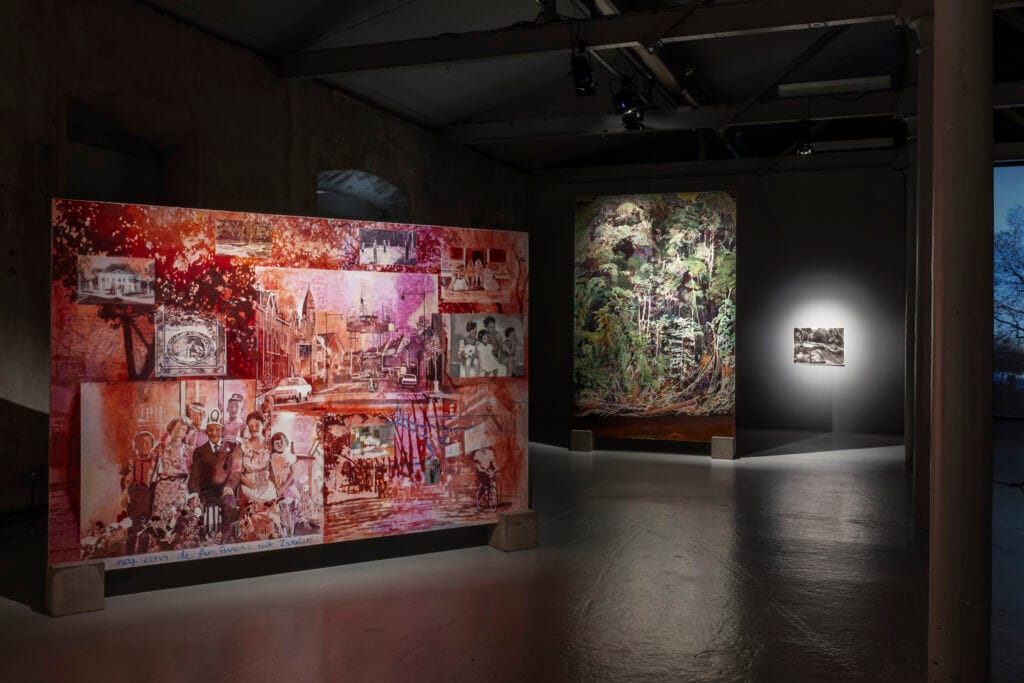
Filippa Arrias (born 1971) uses painting and collage as her principal artistic media, through which she explores our perceptions of time and memory. Her focus in recent years has been an artistic research project that took her to Suriname to explore her own family history. Arrias blends documented stories, including archival photographs, with her own contemporary images and narratives. Her large paintings become narratives to step into, incorporating layers of materiality, time and memory processes.
Filippa Arrias was born in Gothenburg, Sweden, and now lives and works in Stockholm.
Fikret Atay
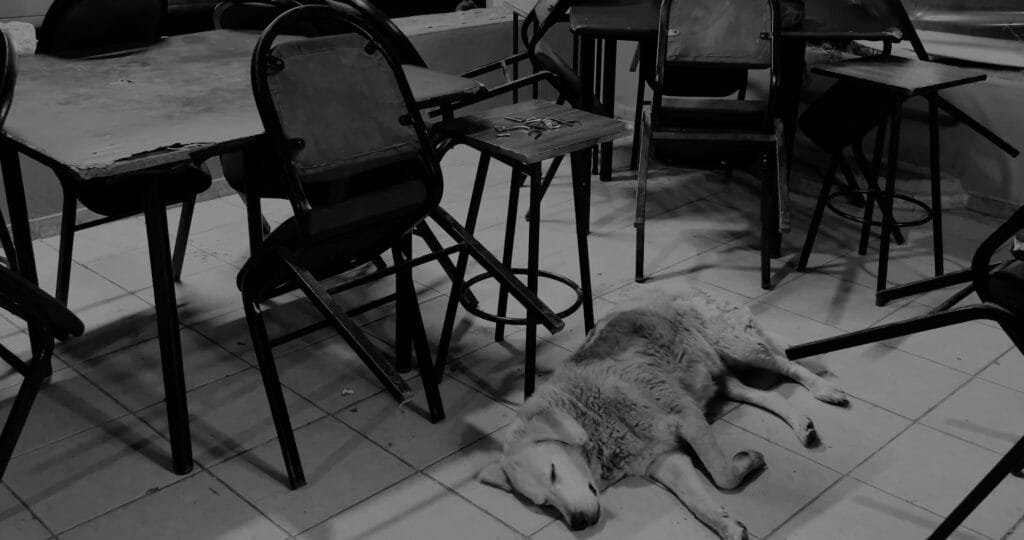
Still image from “Echoes of time”. 2026. Photo: private.
Video artist Fikret Atay (born 1976) examines the tensions that arise from antagonism between West and East. He exploits the boundary between documentary and fiction to highlight how cultural situations and expression, often with a local context, can have political dimensions of oppression and vulnerability from a global perspective. Recently, Atay has specifically focused on how inner landscapes and our senses are in constant flux. His new work Echoes of time depicts the route to the West, controlled by smugglers.
Fikret Atay was born in Batman, a Turkish city on the border with Iraq. He is of Kurdish descent and currently lives and works in Örebro, Sweden.
Leone Contini
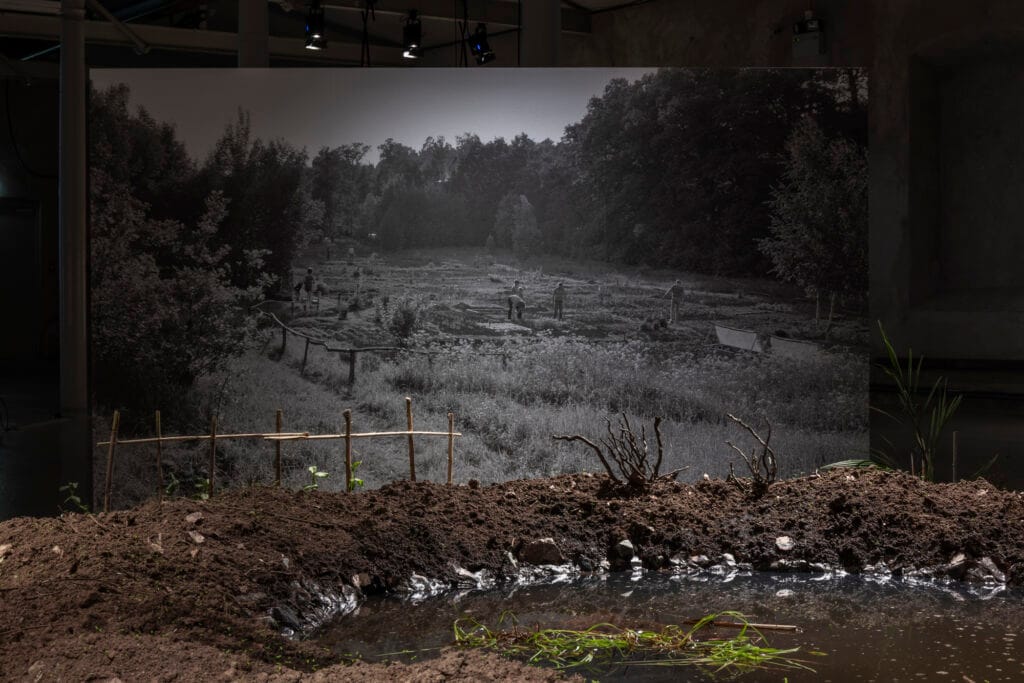
Leone Contini (born 1976) works with a variety of media, including performance lectures, installations, text, drawings and collective interventions in public spaces. Contini’s research and art inhabit the intersection between anthropology, aesthetics and politics. Within these fields, he focuses on intercultural conflicts, power dynamics, migration and diasporas – how these phenomena affect the anthropological context and the botanical landscapes of the locations in which he conducts his fieldwork. By collecting and experimenting with seeds, soil and stories, Contini explores migration, coexistence and histories of different species.
Leone Contini’s participation is supported by the Italian Culture Institute in Stockholm.
Leone Contini was born in Florence, Italy, and currently lives and works in Tuscany.
Gerd Göran
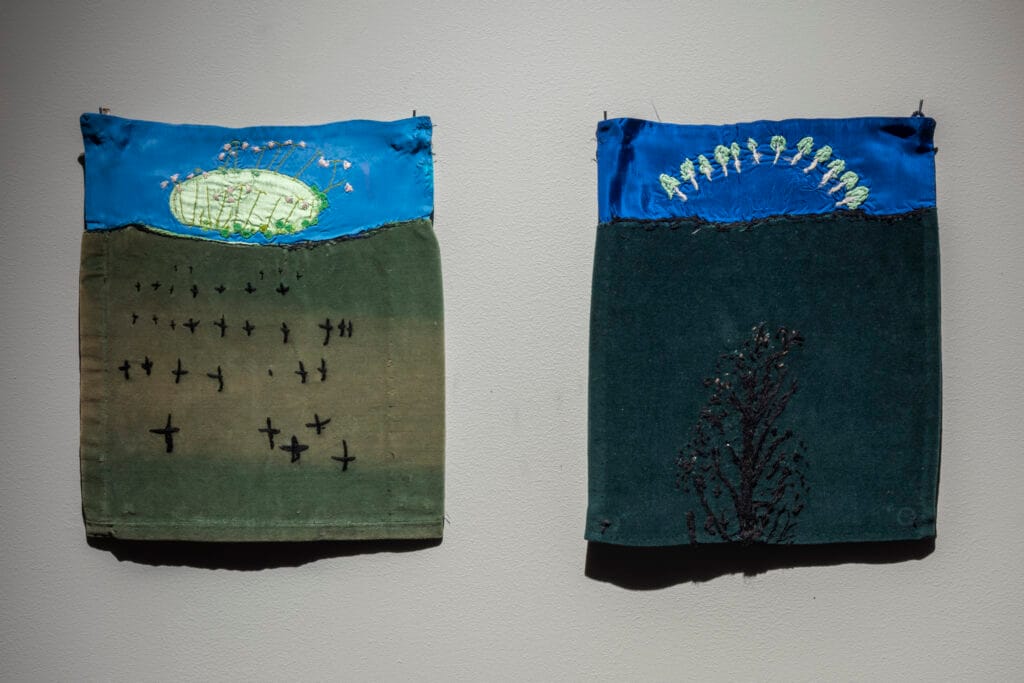
Gerd Göran (born 1919) has amassed a rich, colourful and multifaceted body of work over her 90 years as an artist. She worked primarily as a painter and textile artist, drawing inspiration from nature and life, often from where she herself had put down roots: the rural location of Sångshyttan, just outside Hällefors, where she lived for almost her entire life. Her work is characterised by a lifelong and joyful creativity, marked by a tenacious sense of curiosity and a love of the magic to be found in everyday life and art itself. Another key aspect of Göran’s art is her interest in climate politics.
Gerd Göran was born in Akre, Sweden, and currently lives in Skåre.
Thomas Hirschhorn
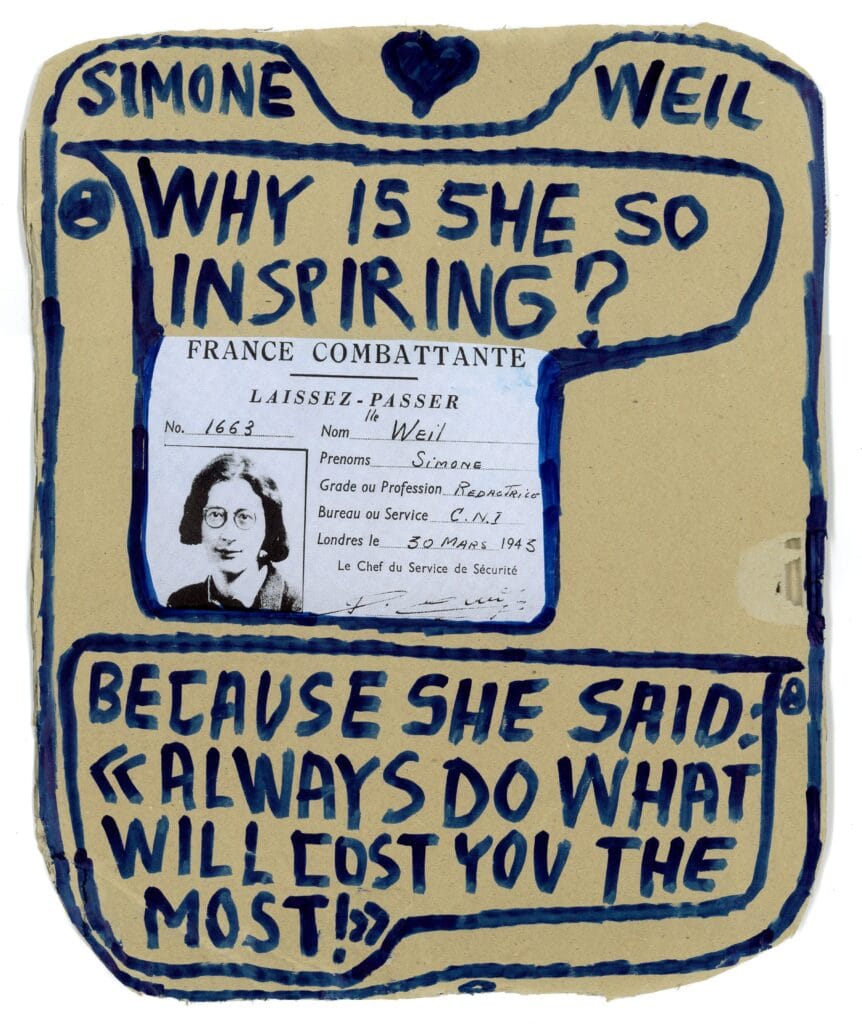
Thomas Hirschhorn (born 1957) is best known for his works in public spaces and for the various simple materials he uses: cardboard, tape, paper, magazine clippings and aluminium foil. A recurrent feature of his work is questioning the autonomy of a work of art, as well as asserting the power of art to move people and create change, not least in relation to Andre. Hirschhorn feels that art allows us to truly meet one another: one to one, as equals. With that in mind, many of his works are dedicated to philosophers, authors and artists he himself loves. One such author is Simone Weil, and Hirschhorn’s series Why I love Simone Weil has been an ongoing artistic dialogue since 2019.
Thomas Hirschhorn was born in Bern, Switzerland, and now lives and works in Paris, France.
Moa Israelsson
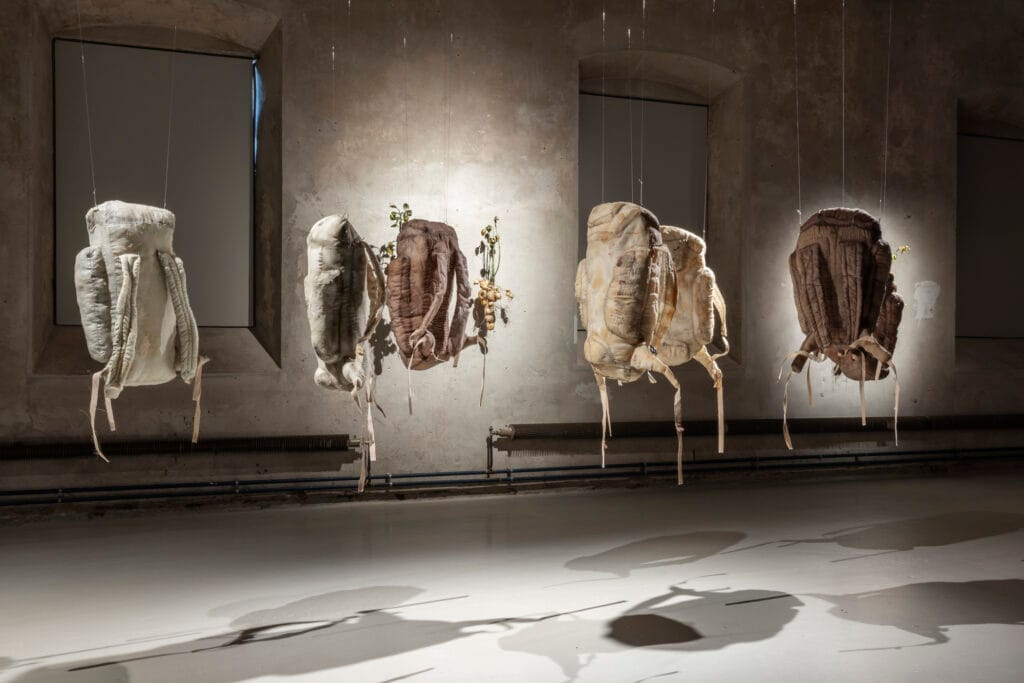
Moa Israelsson (born 1982) is a sculptor, working with a variety of techniques and materials. Meticulously hand-stitched and painted sculptures are the focus of her art, works that bear witness to the passage of time, objects in decay and the human condition. Israelsson often works with silk, paper and leather – one sheer and delicate, the other durable and hard-wearing. Her soft, vulnerable and unadorned sculptures evoke feelings of tenderness, the curious yet familiar.
Moa Israelsson was born in Ljungby, Sweden, and now lives and works in Åkers Styckebruk.
Alejandro Leiva Wenger
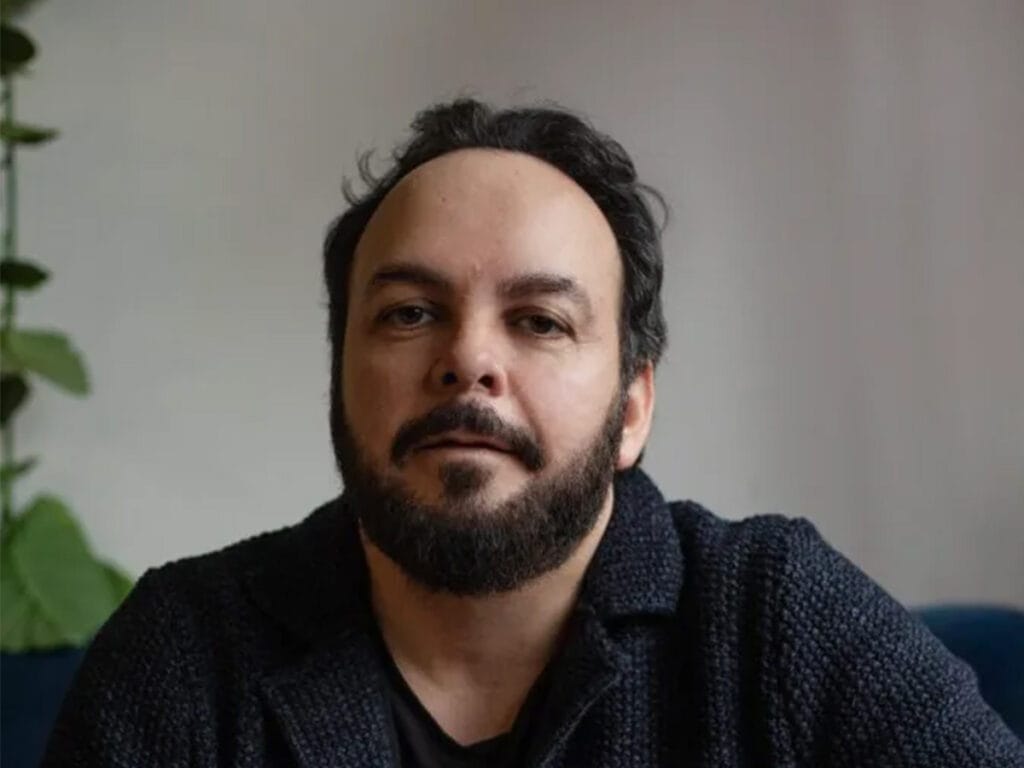
Alejandro Leiva Wenger (b. 1976) is a writer, playwright and holds a PhD in sociology. He made his literary debut in 2001 with the short story collection Till vår ära and has written plays for institutions including Dramaten and Kulturhuset/Stadsteatern in Stockholm. His dramatic work has received several awards, and since 2025 he has also served on the board of the Swedish Writers’ Union.
For the exhibition Att slå rot, Leiva Wenger has been invited to deliver the opening speech and an introduction to the exhibition, which is published in the exhibition booklet under the title HÄR ÄR MINA FRÖTTER.
Alejandro Leiva Wenger was born in Concepción, Chile and lives and works in Stockholm, Sweden.
Hanna Ljungh
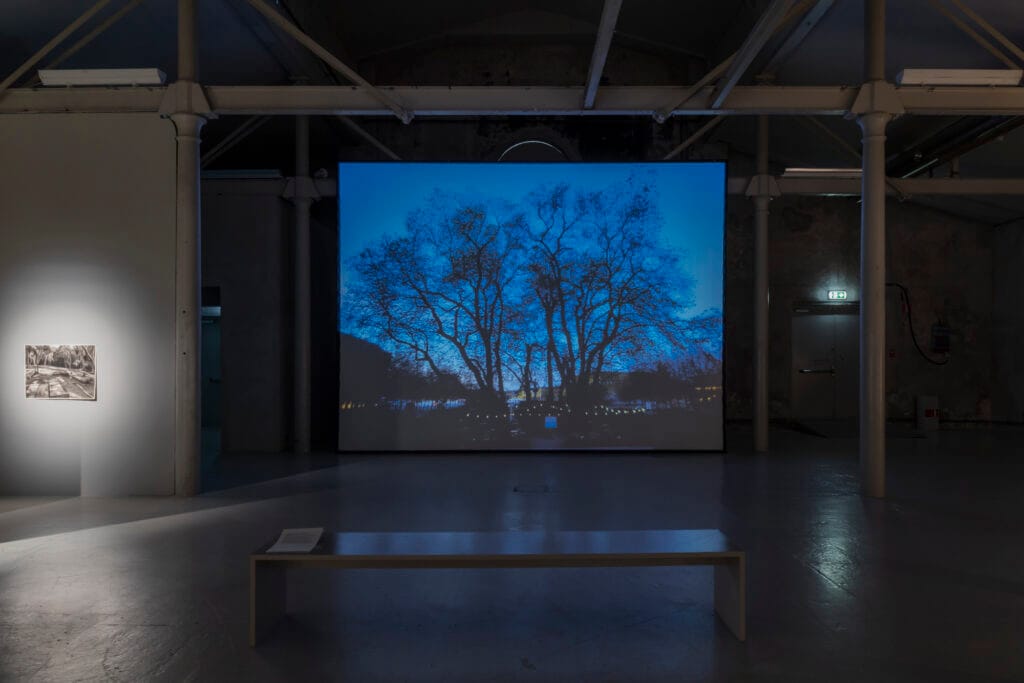
Artist Hanna Ljungh (born 1974) primarily works with film, photography, sculpture and installations. Her artistic practice is devoted to themes concerning land, soil, stone and mountains. Ljungh’s work reflects on and questions the fine line between what we call human and non-human forms of existence and the complex relationships between them. Her work Almarna takes us into Kungsträdgården over the course of one night to witness the battle for the trees, which remain standing to this day, in the form of a performance that takes place during the minutes crucial to the fate of these elm trees back in 1971.
Hanna Ljungh was born in Washington DC, USA, and currently lives and works in Stockholm, Sweden.
Daryna Mamaisur
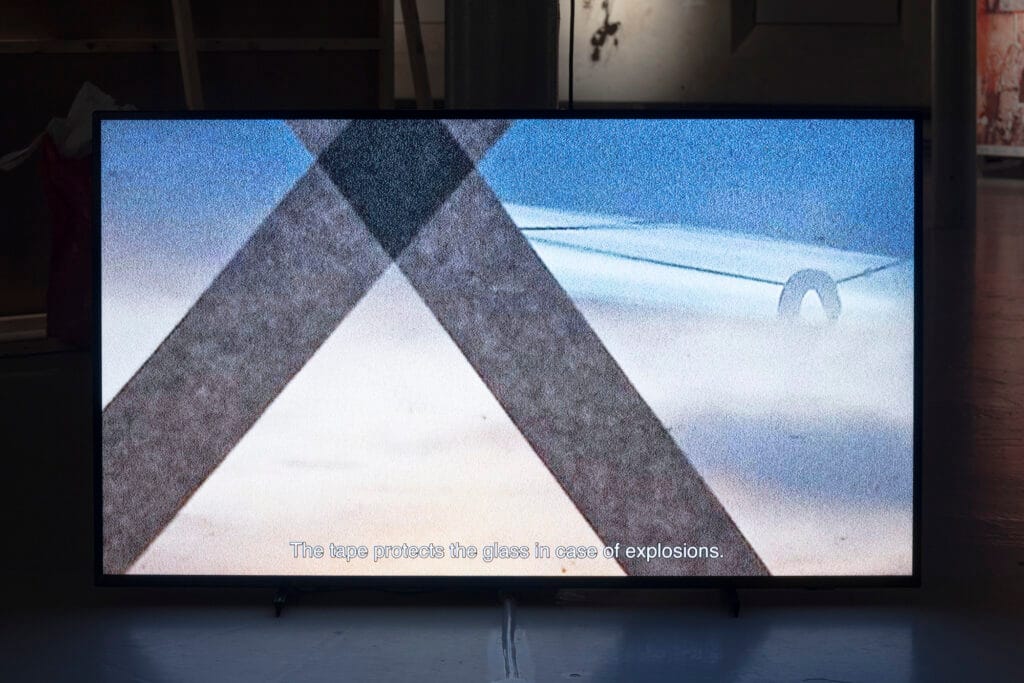
Daryna Mamaisur (born 1991) combines art research, filmmaking and photography in her practice. The central focus of her art is transformation of landscapes and public spaces in relation to visual culture, memory and political ecology. Mamaisur often combines different media and approaches that go beyond traditional documentary films, including hybrid formats, performative elements and archive material. She is interested in poetic and author-driven film that is simultaneously rooted in everyday life; highlighting complex histories and emotions through everyday experiences. Her recent work has tackled themes of migration, exile and home, as well as the fragility and inadequacy of language in the context of the realities of war.
Daryna Mamaisur was born in Kyiv, Ukraine, and currently lives and works in Lisbon, Portugal.
Jumana Manna
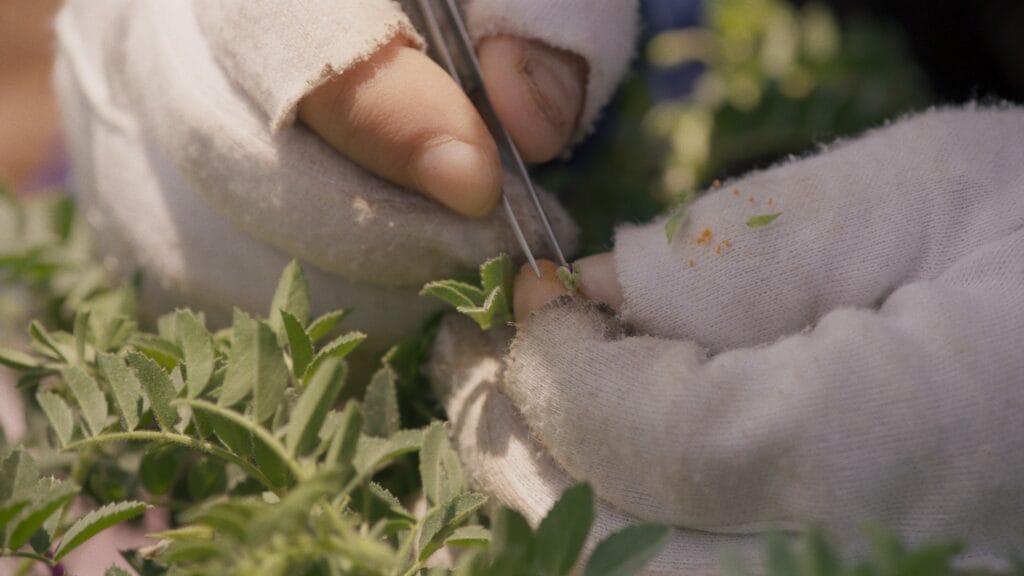
With the body, land and materiality as her focus, Jumana Manna (born 1987) explores how power is articulated in relation to colonial structures and the histories of specific locations. She scrutinises the tension between modernist traditions of categorisation and conservation, and the unpredictability and potential of destruction – as part of life and renewal. These paradoxes in conservation practices are a frequent focus of Manna’s work, particularly within the fields of architecture, agriculture and law. In recent years, Manna has garnered international acclaim for her films, with documentary and fictional elements depicting complex geopolitical conditions and migration: of humans, land, climate and seeds.
Jumana Manna was born in New Jersey, USA, and now lives in Berlin, Germany, but also works in Jerusalem, Palestine.
(p)Art of the Biomass / Holmstedt & Lobell with guests
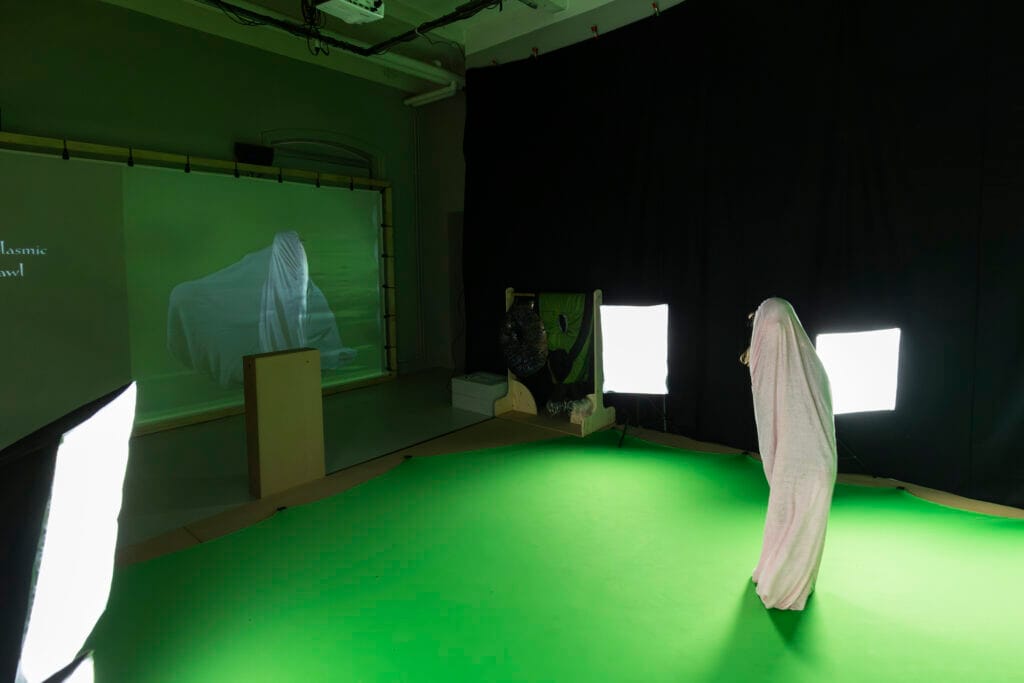
(p)Art of the Biomass is an art platform for cross-disciplinary collaboration and exploration, initiated by artists Janna Holmstedt (born 1972) and Malin Lobell (born 1965). They offer exploratory labs, ecosocial sculptures and site exploration, in which art, ecology, microbiology, cultivation and speculative thinking can all interact. The installation The Subterranean Carnival is dedicated to the subterranean world: teeming with life that we humans are dependent on yet rarely see or spare a thought for.
The work is part of Holmstedt & Lobell’s ongoing collaboration with Edith Hammer’s Lab and The Soil Chip Project, together with researchers in microbial ecology at Lund University, within the project Windows to the Underground (funded by Formas). Edith Hammer’s Lab has developed a unique method for studying and filming soil-dwelling organisms and fungi without removing them from their living environment or tearing apart the soil ecosystem.
The Subterranean Carnival takes place in the Project rooms from April 18 to May 3, and from June 2 to June 18.
Janna Holmstedt was born in Gothenburg, Sweden, and currently lives and works in Stockholm. Malin Lobell was born in Linköping, Sweden, and currently lives and works in Stockholm and Kåseberga.
Hiroko Tsuchimoto
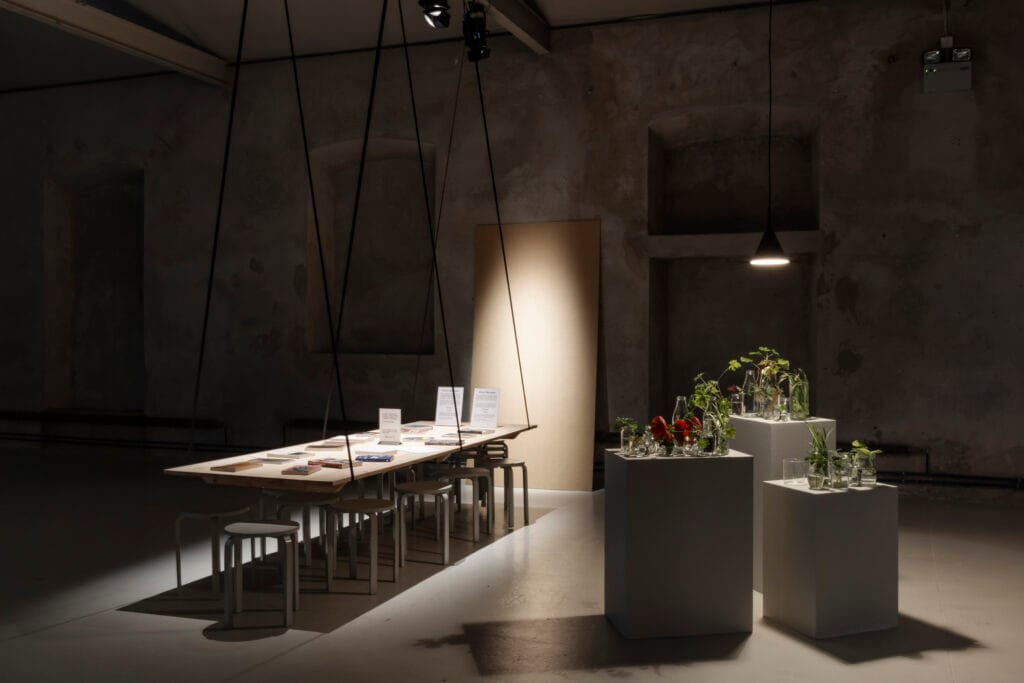
Hiroko Tsuchimoto (born 1984) is a visual and performance artist, who employs participatory practices on stage and in public spaces. Her projects often revolve around Western dichotomies and structures. Her practice incorporates dialogue, drawing, walking and gardening, developing this together with human and more-than-human partners. Tsuchimoto’s recent focus has been examining and highlighting colonial notions and imperialist might through the history of gardens. She is also interested in preservation and collection via our senses and memories – how, for example, a plant can take root in a person.
Hiroko Tsuchimoto was born in Sapporo, Japan, and now lives and works in Stockholm, Sweden.
Graphic design: Aziza Ahmad.
Contact
Partners