
The value of soil – A conversation between three researchers
29 April
18.00–19.00
The exhibition Taking root, including the Subtrerranean Carnival, will stay open until 18.00.
Open talk with Vetenskap & allmänhet
The Salon
Language: Swedish & English
Entrance free and open for all
On soil
When we talk about soil, it is often from a human, economic perspective. We want to protect our soils because they perform “services” for us: providing food, purifying our water. To counter climate change, the soil’s ability to store carbon is also highlighted, and it is possible to “invest” in carbon credits. At the same time, a movement is emerging in the opposite direction – from the large-scale and transactional toward the small-scale, identity-forming, and communal – pointing to the idea that soil has a value beyond the economic. By cultivating the soil, we connect with our cultural heritage while also learning to practice resilience in everyday life.
During the conversation, three researchers come together to discuss different aspects of the value of soil: both relational – who has the right to define value – and temporal – how human practices of land use leave traces across time, both forward and backward.
About Vetenskap & allmänhet
The Swedish organization Vetenskap & Allmänhet aims to promote dialogue between researchers and various audiences in the wider society. Within the framework of the EU project LOESS, the organization – together with 15 European partners – is carrying out an initiative that seeks to increase public understanding of the importance of soil health for ecosystems, climate, and food security, while also gathering insights for research on how soil health can best be communicated.
Färgfabriken has developed a strong practice of integrating research into the production of new exhibitions and, in 2026, has a particular focus on roots and soil. In this collaborative project, we draw on Vetenskap & Allmänhet’s research network in soil health and Färgfabriken’s established public platform to create a public discussion event on soil health.
About the researchers
Sanna Barrineau
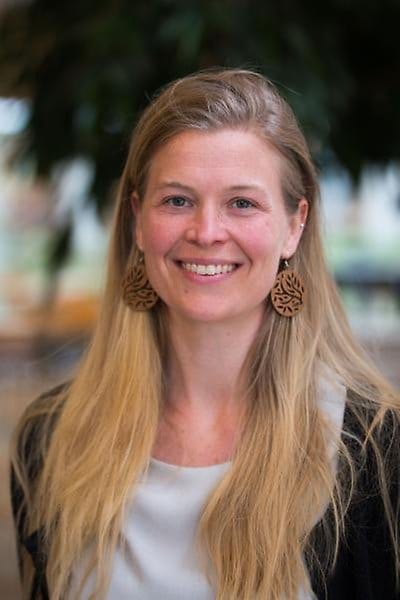
Sanna Barrineau is a researcher at the Centre for Health and Sustainability at Uppsala University and holds a PhD in environmental communication (2025). Her work focuses on how relationships between humans and nature unfold in the context of transformations in agriculture and food systems, with particular attention to care and questions of temporality. Her doctoral thesis explored carbon sequestration in agriculture as a context in which intriguing relationships between humans and soils take shape.
Working with relational perspectives and future-oriented thinking, her research aims to cultivate a sense of possibility, where “thinking with soils” can serve as an invitation to reframe and reinterpret these relationships. In this way, her research seeks to highlight the potential for profound transformation in agriculture, as well as the kinds of futures that are rendered (un)thinkable and (un)actionable.
Tord Ranheim Sveen
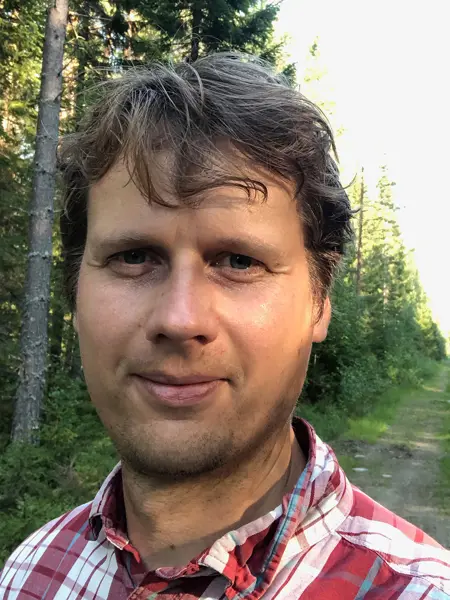
Tord Ranheim Sveen studies how soil microorganisms are affected by land use. In his doctoral thesis (SLU, 2024), he examined how microbial diversity and the capacity to decompose carbon compounds change as open landscapes become overgrown and forested, and how traces of the microbes we observe in present-day ecosystems can be linked to how the land was managed decades or even centuries ago.
The abundance and diversity of microbes living in and around us are almost unimaginable, and they are estimated to make up 99.8% of all species on Earth. Yet most microorganisms remain unknown today, as we have long lacked the means to observe and study them. By combining DNA-based methods with fundamental ecological theories and concepts, Tord aims to connect the microbial world at the molecular level with the ecosystems in and through which humans live and act.
Emil Sandström
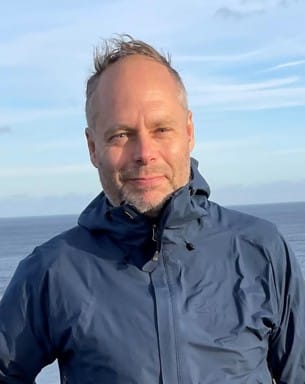
Emil Sandström is an associate professor and senior lecturer in rural development at the Swedish University of Agricultural Sciences (SLU) in Uppsala. His research focuses on how people organize around natural resources at the intersection of local practice and politics, with particular emphasis on relational perspectives and processes of commoning.
In this work, he is interested in how relationships between people, places, and natural resources are shaped through everyday practices, such as agriculture and other place-based activities. He is currently leading a research project on Green Wave migration, examining its ideals, practices, and significance for rural development and the organization of food systems.